
Breaking Down RV EPDM Rubber Roofs
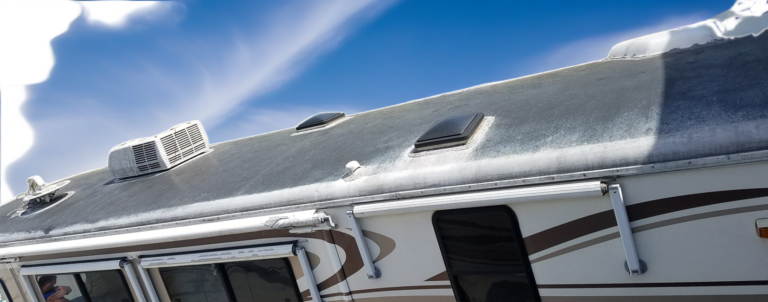
RV Roofs. Types, maintenance, caulking, tapes, protective coatings, all hot and very heated topics in forums, discussion boards, social media. One of the most common types of RV roofs used in the industry is the EPDM rubber roof. These membranes have been the industry standard on the majority of RVS for years. From the smallest travel trailer to the biggest motorhome. Effective when installed and maintained correctly, it is important for an RV owner to understand the construction and limitations of the roof material.
How EPDM Is Constructed
First, let’s look at the construction of the typical EPDM membrane used on RV roofs. EPDM stands for Ethylene, Propylene, diene, a molecule with two double bonds, and diene monomer. The diene monomer is what gives EPDM the ability to cross-link giving it excellent flexibility, UV and weathering resistance and long term durability. These properties are why EPDM became the dominant material for both commercial flat roofs and RV roofing membranes.
There are two major manufacturers of EPDM roofs. Carlisle SynTec makes EPDM for Dicor, who then sells the product under the Dicor brand. Alpha Systems is one of the only companies that actually manufactures the EPDM rubber roofs they sell to the RV industry. Both companies describe the roof material as a laminated roofing membrane. Laminiated roofing membrane refers to the construction, a black EPDM base layer and a white thermoplastic/EPDM blend cap. Pure EPDM is naturraly black. The white cap a thermoplastic EPDM compatible layer that can accept the white titanium dioxide needed to make the cap. More reflective, uv resistant, cosmetically stable but thinner that the underlying EPDM.
Why Understanding the Construction of a Rubber Roof Helps an RV Owner
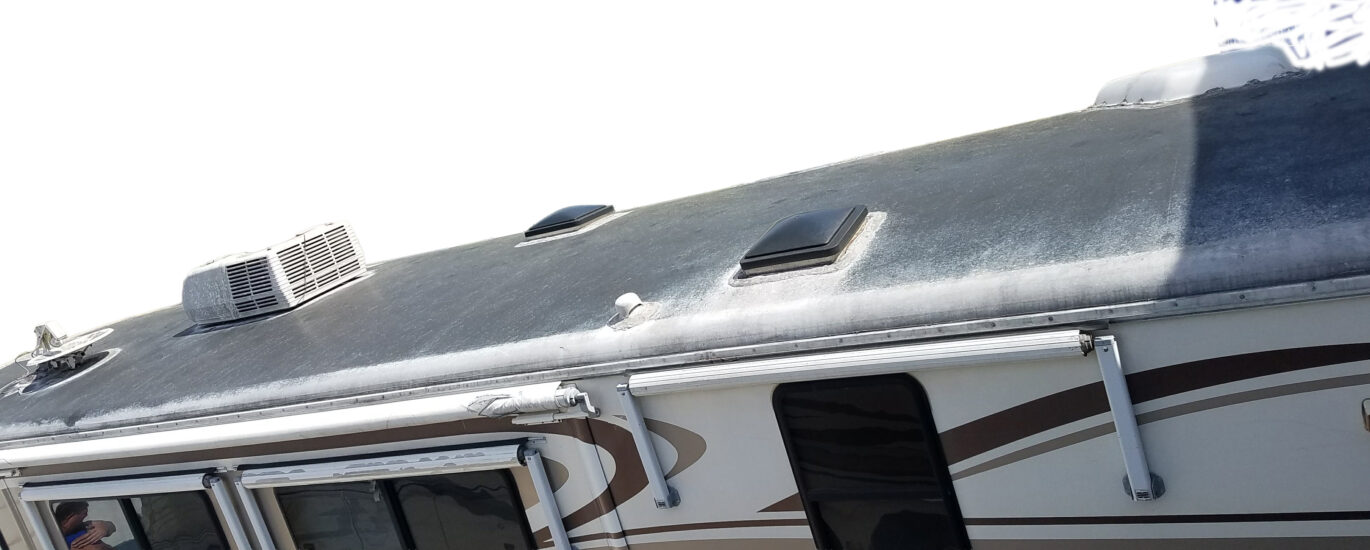
This white layer gives the RV owner a visual indication that the roof is at the end of its useful life. The pure, black EPDM cannot withstand prolonged sun exposure. It will dry, crack, and deteriorate faster than the white cap with UV-resistant titanium dioxide. The black being exposed is very important for an RV owner to understand for two reasons.
1. You know you need a new roof.
2. Both Dicor and Alpha Systems technical manuals specifically say that you cannot coat it with any type of rolled-on product. Coating systems can bond to the softer, blended white cap,not to the exposed black. Any type rubber is notoriously hard to bond to with anything. Once black is exposed Dicor and Alpha recommend a new membrane.
Use This Information Against Social Media Advice, Choose Facts
Why is this important? Many Facebook posts, forum comments, and other sources, tell RV owners to just roll on a coating to save the roof. Anything from professionally applied products like RV Armor, RV Roofing Solutions to DIY products like liquid rubber roof, Crazy Seal, Henri’s Tropi cool are recommended on failing EPDM rubber roofs. RV owners need to know these materials will fail on a black roof. This can help you make a more educated decision before spending thousands of dollars. No one wants to spend thousands more to replace the membrane after the coating fails. Side note: these type coatings do not stop active leaks. You must make sure your caulking and sealants are in good shape before applying overlaying products. More guidelines in an upcoming blog.
How to Fix a Failing EPDM Rubber Roof
Attempting to save a decaying EPDM roof is probably one of the most performed actions by any RV owner. For every owner that says they have never had a problem with their rolled on coating, whether professionally done or DIY, there are many owners who have experienced catastrophic results. We always need to keep in mind that only 30 percent of the adult population is using and on Facebook, forums and groups. Getting advice or guidance not based on fact from these sources only gives you a snippet of what the majority of RV owners have experienced.
Check Information on Silicone Coatings and EPDM Rubber
A quick internet search will find you multiple manuals, testing and proof that EPDM and silicone are not compatible, the two materials do not bond together effectively. You have a better chance of success if the white cap is still there, very minimal chances if the black EPDM is exposed. Manufacturers in all industries treat silicone EPDM interaction as a risk area. The Phelps Industrial Products elastomer chart shows EPDM and silicone have different chemical resistance profiles. Since they behave differently chemically, it reinforces the industry standards that silicone does not bond well to EPDM. EPDMCoatings.com gives more details on what would be involved and what types of EPDM could possibly take a silicone coating.
In Conclusion
In conclusion, understanding the construction and limitations of EPDM rubber roofs is crucial for any RV owner. While the industry standard, EPDM, offers excellent flexibility and durability when maintained correctly, its effectiveness diminishes significantly once the black base layer is exposed to sunlight. Many RV owners might consider applying coatings to prolong the life of their roofs, but it is essential to recognize that these products often fail on exposed black EPDM. This misunderstanding can lead to costly repairs and replacements. Therefore, RV owners need to seek reliable information and follow manufacturer guidelines to make informed decisions about their roofing maintenance and avoid unnecessary expenses. Adopting a proactive approach to roof care will ultimately contribute to the longevity and performance of an RV’s most critical protective feature: the roof.